Every soaring bird eventually lands
As magical as it seems to fly forever, birds and humans alike need to find their resting place.

I’m doing more traveling than I usually do on my sabbatical, and I’m also in the middle of buying a home. So I am packing up our things in one home, preparing another one, and in the midst of it, trying to watch as many baseball games as I can.
There’s something freeing about being able to rest and relax. I love being able to do that at a ballpark, specifically. But more than that, there’s something deeply liberating about being home and finding a place to call home. I feel the absence of that in the liminal space that I currently dwell in.
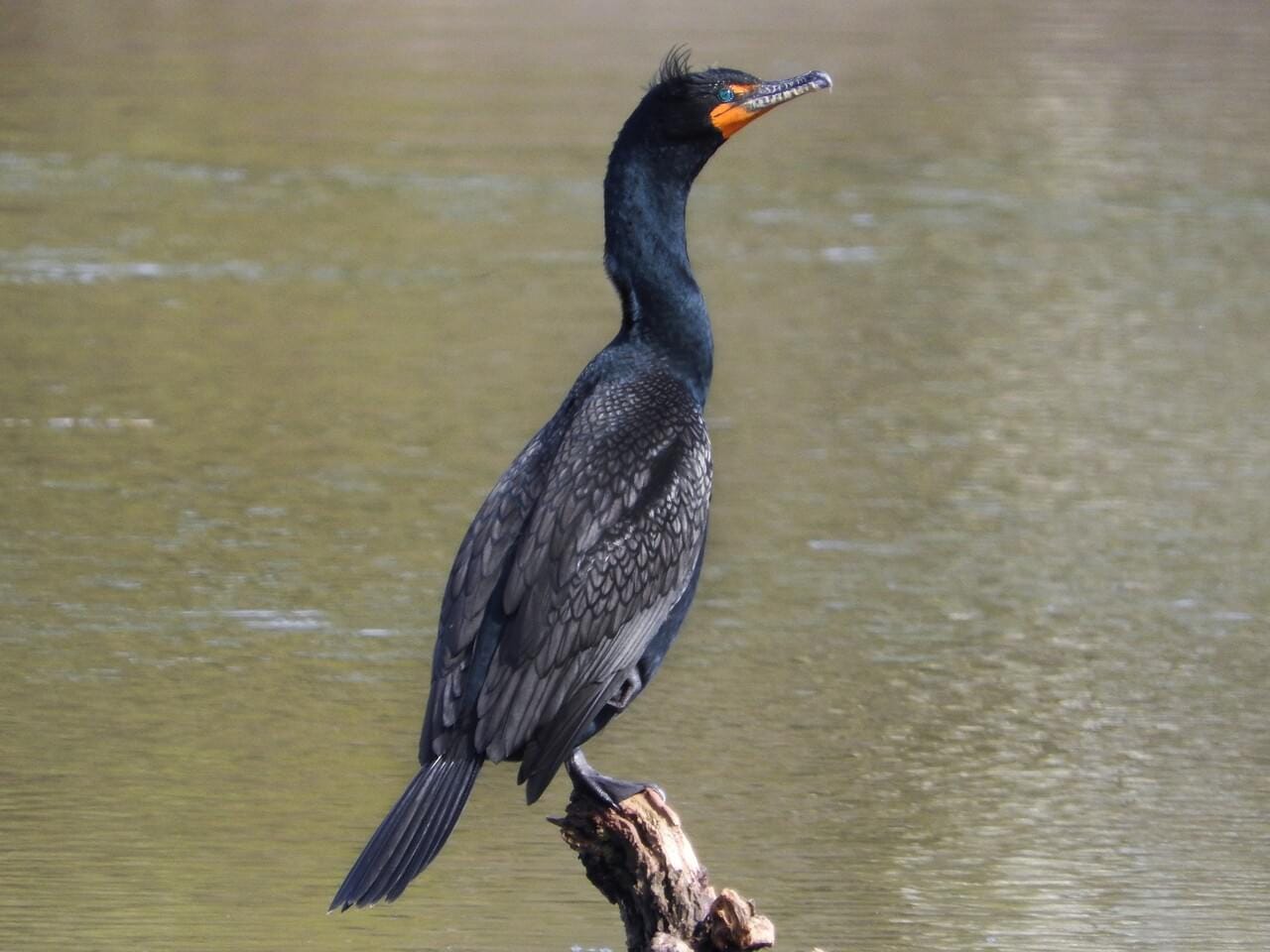
I was reminded of this as I was observing a Double-crested Cormorant recently. It’s a heavy bird that doesn’t soar, exactly, but rather flaps continually so it stays in the air. It flies like any bird, and it still feels miraculous to see. But it does eventually land, probably on water for this species, and finds its resting place.
I think the poles around which we frame freedom and liberation are self-discovery and self-expression, and also the safety and security of home. I am a queer Arab, and so I want to offer my own experiences when it comes to liberation around those two poles.
In my own queer experience, it’s important that I feel the safety to express myself, my gender, and my sexuality in ways that feel true to me. Of course, it can be risky and vulnerable to do so. Though we’ve made strides in rights, dignity, and even celebration of queer people, the world is still a hostile place for queer people. Last week, several baseball players refused to wear Pride flags on their respective teams’ Pride nights. The Egyptian and Iranian national soccer teams said they’d walk off the pitch if there were any unauthorized displays of LGBTQIA pride. Sometimes, in my own experience, I feel the judging gaze of my neighbors and of strangers at me as I express my queerness.
I’m grateful that in most spaces in my life, I find that freedom and expression. It’s a painful reminder, though, that the culture I am from often doesn’t offer that. And that’s not to single out the Middle East; there are plenty of places in the West and in the United States that don’t offer spaces for expression or dignity. And the church is singularly the chief force against queer people.
The trouble doesn’t end there for this queer Arab, however. On the other side of my queerness is my Arab identity. It results in solidarity with freedom movements in the Middle East, notably in Palestine. Like my queer identity, I wear my Palestinian solidarity on my sleeve—often quite literally, whether it’s a kuffiyeh I proudly wear around my shoulders or a Palestinian bracelet. Even in the West, I’m afraid of the assumptions people will make about me because of how I visibly demonstrate my politics. My politics, though, aren’t just a matter of personal opinion, but rather, something rooted within me.
For displaced people, like the Palestinians, it is not just in self-expression that they want freedom, but in finding their home. They don’t want to just fly like that cormorant; they want to find a place to land. And not just any place, but home.
We want to build a world where people are free enough to fly and free enough to find a place that they call home. In a sense, we’re all in a liminal space waiting to arrive at our true home. But I hope we can all find the comfort and security we need to fly where we want, but also to land.
For me, I hope we can all spread our wings and find the freedom we need to fully express ourselves. It’s hard to find ourselves in this oppressive world. And I am aided in my journey of self-discovery by finding both myself and my resting place in Jesus. As I often sing, “Rock of Ages, cleft for me, let me hide myself in thee.” Jesus is the place I find both myself and my home.